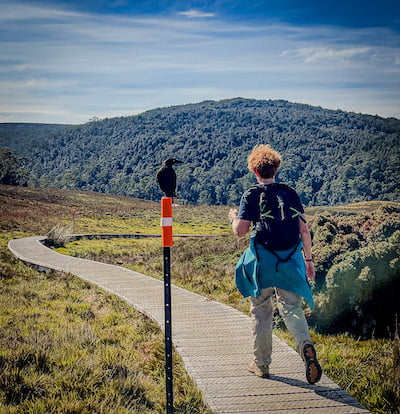
The first time I stood at Ronny Creek watching walkers heft twenty-kilogram packs onto their backs at dawn, I understood immediately why the Overland Track Tasmania has earned its reputation. These were people about to spend six days moving through some of the oldest and most remote wilderness on the planet — and every one of them looked equal parts terrified and elated. I have driven up to Cradle Mountain more times than I can count, and that scene never gets old.
The Overland Track is widely regarded as one of Australia’s greatest long walks — and with the right preparation, it is achievable for most fit adults. I’ve seen hikers in their 60s kick this trails butt! This guide covers everything you need to plan it: how to book, what it costs, when to go, what to pack, and whether to walk self-guided or join a tour.
What Is the Overland Track?

The Overland Track runs 65 kilometres through the Cradle Mountain–Lake St Clair National Park in Tasmania’s Central Highlands. Most walkers complete it in six to seven days, travelling south from Cradle Mountain Village to Cynthia Bay on the shores of Lake St Clair. The majority walk north to south, though the route can be done in reverse outside the regulated season.
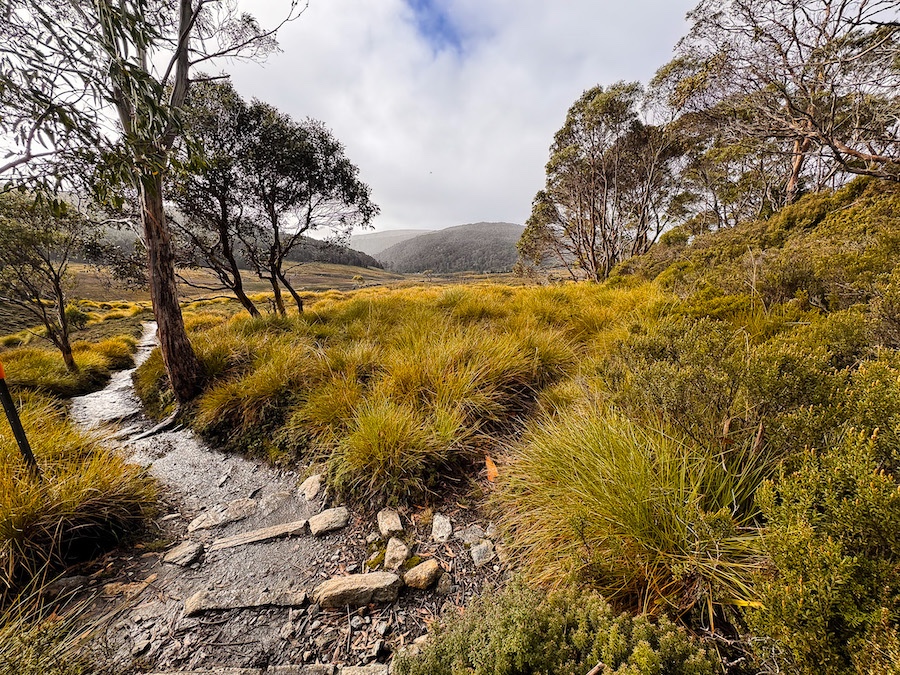
The track passes through alpine moorland, buttongrass plains, ancient rainforest and past some of Tasmania’s highest peaks, including Mount Ossa at 1,617 metres — the state’s highest point. Side quests to the summits of Mount Ossa, Barn Bluff and Pelion East are optional but reward serious effort with views that stretch across the Central Highlands plateau.
Huts are spaced roughly 10–15 kilometres apart along the route. And they’re a major part of the vibe. Bring some earplugs because you’ll be bedding down with friendly strangers along the trail. You do not need to carry a tent, but you do need a sleeping bag and mat — huts provide sleeping platforms on a first-come basis, and in peak season the hut space fills quickly. Camping beside the huts is permitted and often necessary in January and February.
When to Walk the Overland Track Tasmania
The track is officially open from 1 October to 31 May — this is the regulated season, when a mandatory booking quota system is in place. Outside those months, the track remains technically open, but huts may be unstaffed, conditions are severe, and sections are frequently snowbound. Unless you have serious alpine experience and appropriate winter gear, stick to the October–May window.
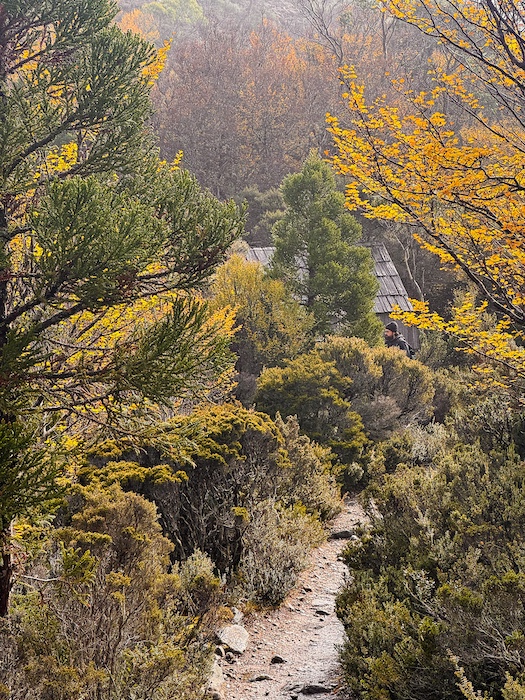
February and March offer the best conditions for most walkers. Crowds are lighter than during the school holiday peak, weather is more settled, and days are long. April is extraordinary during the turning of the fagus — the only deciduous native beech in Australia — when the alpine plateau turns deep gold and amber. April – May is when i recommend hitting this trail. The beauty is unmatched and the weather is generally kinder. Early October can still bring ice and snow to the higher sections and crazy winds, making it feel twice as cold as the temperature reads.
Avoid the Christmas–January peak if flexibility allows. Hut capacities fill quickly during school holidays, and the track can feel uncomfortably crowded for a wilderness experience. Read more about the fagus season and what to expect at Cradle Mountain in autumn.
How to Book the Overland Track — and What It Costs
During the regulated season (1 October – 31 May), walkers must book online through the Parks and Wildlife Service of Tasmania portal. A strict daily quota of 60 walkers starting from Cradle Mountain applies — this has been in place since 2005 to protect the environment. Bookings open well in advance, and popular dates — particularly summer school holidays and the Easter fagus period — sell out months ahead.
Overland Track costs in 2026 (approximate):
- Track fee (peak season, per person): $260 AUD
- National Park holiday pass (additional, required): ~$60 AUD
- Ferry across Lake St Clair (Narcissus Hut to Cynthia Bay): ~$55 AUD per person
- Transfer back to Cradle Mountain or Hobart: varies by operator, budget ~$120 per person
The track fee covers hut access for the duration of your walk. It does not include food, gear, guided services, or transport to and from the trailheads. Total self-guided costs (excluding gear) typically run $500–$700 per person once you factor in transport, permits, and food. Add to that a significant cost of serious gear you need for the harsh conditions (sometimes) that hit this area.
Every year, we hear of people being helivacked off the Overland Track due to the local weather conditions or injuries sustained while trying to survive them.
Self-Guided vs Guided Overland Track Tasmania: Which Suits You?
I have spoken to walkers at both ends of this decision. Here is the honest breakdown.
Self-guided is the most common choice. Your main costs are the booking fee, park pass, food, and transport. You walk at your own pace, take the side trips you want, and manage your own schedule. You need to be comfortable with navigation, carrying 12–18 kilograms over rough terrain, and making good decisions in changeable alpine weather. A detailed topographic map and personal locator beacon are essential — not optional.
Guided tours take the logistics off your plate entirely. Operators like the Tasmanian Walking Company run the track with small groups and provide accommodation in private huts (significantly more comfortable than the public huts), all meals, and the expertise of experienced guides. The cost is considerably higher — guided Overland Track tours typically run from $4,000 to $5,500 per person — but for walkers who want the full experience without the expedition planning, it represents genuine value. You also get private hut access, which means you are not competing for bunk space.
If this is your first multi-day alpine walk, or if you are travelling solo and want the safety buffer of a group, guided is worth serious consideration. For experienced multi-day walkers who prefer independence, self-guided is the better choice.
What Fitness Level Do You Need?
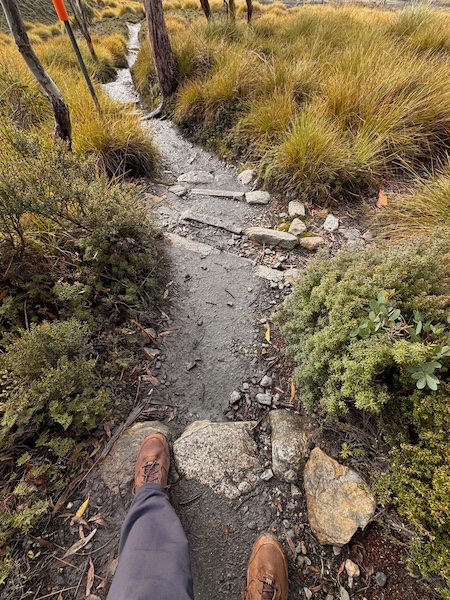
The Overland Track is not a technical climb, but it demands sustained effort over multiple days. The challenge is cumulative distance and elevation carrying a loaded pack — not any single extreme section. And the other challenge, is weather.
Before you go, you should be comfortable:
- Walking 12–18 kilometres per day on uneven, often wet terrain, with wet feet if you have the wrong shoes
- Carrying 12–18 kilograms for sustained periods over unstable ground
- Hiking confidently in cold, windy, snowy, wet and foggy conditions – you could get any of these, any time of year
- Reading a topographic map and navigating in low visibility
The optional summit of Mount Ossa adds a steep, rocky scramble and 3–4 hours of additional time. It is worth doing if conditions allow and your legs have the reserves. Most fit adults who regularly walk full-day hikes and have done at least one previous overnight walk will find the main track manageable with proper preparation.
What to Pack for the Overland Track
Packing for the Overland Track is an exercise in ruthless prioritisation. Every gram you add on day one becomes a real problem by day four. And you can literally get four seasons in one day, any time of year. There’s entire facebook community groups about what to pack for the track. It’s a serious logistical issue and major tetris mission for track go-ers
Non-negotiables:
- Sleeping bag rated to at least -5°C (huts are not heated)
- Sleeping mat (huts provide platforms, not mattresses)
- Waterproof and windproof jacket and pants with full hood — these have to be top quality. I like the Patagonia Triolet range.
- Gaiters for your lower legs
- Thermal baselayers (merino wool, not cotton)
- Trekking poles (essential on the descents)
- Water bottle and filter, or purification tablets
- First aid kit including blister management
- Topographic map and compass (phone batteries fail in cold)
- Headlamp with spare batteries
- Personal locator beacon (PLB) — hire one in Hobart if you do not own one
- Food for your planned days plus one emergency day
Brand and quality matter here. Check out the facebook community groups about the Overland Track Walk for the best recommendations if you’re hunting around for the best gear.
What not to bring
It’s not a good idea to bring glass containers, excessive clothing changes, or anything you are not willing to carry out. The track operates under strict Leave No Trace principles, and rangers do check packs at the start. All food and waste comes out with you.
And you don’t have to buy everything. You can hire the big items. Bushwalking Hire Gear Tasmania hires out items like gaiters, waterproof overpants, trekking poles and headlamps.
Less stuff to carry in your bag to Tassie!
Getting to Cradle Mountain and Back from Lake St Clair
Most walkers fly into Hobart or Launceston, then drive or take a shuttle to Cradle Mountain. From Hobart, the drive to the Cradle Mountain Visitor Centre is approximately 2.5 hours. From Launceston it is around 1.5 hours. The actual track starting point — Ronny Creek — is 2 kilometres inside the park from the Visitor Centre, with shuttle buses running regularly during peak season.
At the southern end, Lake St Clair is about 2 hours from Hobart. Most walkers take the ferry from Narcissus Hut across the lake to Cynthia Bay (saving 17 kilometres of walking), then transfer by bus or arranged transport back to Hobart, Launceston, or Cradle Mountain to retrieve their vehicle.
If you are driving yourself, consider parking in Hobart and taking a shuttle to Cradle Mountain — it simplifies the return logistics considerably and avoids leaving a car unattended at a remote carpark for a week.
| Practical Information | Details |
|---|---|
| Track distance | 65 km (Cradle Mountain to Lake St Clair) |
| Duration | 6–7 days (most walkers) |
| Season (regulated) | 1 October – 31 May |
| Track fee (2026) | ~$260 AUD per person (peak season) |
| National Park pass | ~$60 AUD holiday pass (required, separate) |
| Guided tour cost | $4,000–$5,500 AUD per person (all-inclusive) |
| Booking | Parks and Wildlife Service Tasmania online portal |
| Daily quota | 60 walkers per day from Cradle Mountain start |
| Start point | Ronny Creek, Cradle Mountain (~2.5 hrs from Hobart) |
| End point | Cynthia Bay, Lake St Clair (~2 hrs from Hobart) |
| Difficulty | Moderate–hard (multi-day alpine terrain with full pack) |
Nearby Walks and What to Do Next
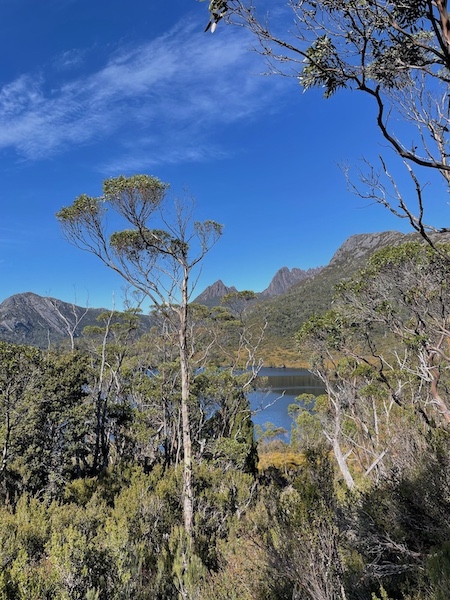
If the Overland Track is too large a commitment for this trip, the Cradle Mountain day walks give you the same landscape without the six-day investment. The Dove Lake Circuit is accessible and flat enough for most fitness levels, and the Twisted Lakes and Hansons Peak walks add more elevation and solitude. See the full guide to the best Cradle Mountain walks here.
If you are drawn to multi-day walking but want something shorter, the Three Capes Track on the Tasman Peninsula is a four-day coastal walk along some of Australia’s most dramatic sea cliffs. It is bookable through the same PWS portal and widely regarded as the more accessible of Tasmania’s two great long walks. Read more about the Tasman Peninsula walks here.
For a broader overview of walking in Tasmania, the Tasmania short walks guide covers the best day walks across the whole island.
And book your Cradle Mountain accommodation at least 6 weeks before you come!
👀 Read More: Our insiders Guide to Captivating Cradle Mountain
The Overland Track is the kind of walk people describe — unprompted, years later — over dinner. It’s a bucketlist trail. It also demands proper planning, a reasonable level of fitness, and a booking made well in advance. But the combination of alpine plateau, ancient forest and six days of genuine wilderness is difficult to replicate anywhere else in Australia. Get your dates locked in early, get some loaded day walks done beforehand, and go.
FAQ: Overland Track Tasmania
How long is the Overland Track?
The Overland Track is 65 kilometres from Cradle Mountain to Lake St Clair. Most walkers complete it in 6 to 7 days walking south (north to south is the standard direction during the regulated season). Side trips to peaks like Mount Ossa and Barn Bluff add extra time and distance.
How much does the Overland Track cost in 2026?
The track fee is approximately $260 AUD per person for the regulated season (October to May). A National Park holiday pass (~$60 AUD) is required separately. Budget an additional $50–$120 for transfers and ~$55 for the Lake St Clair ferry. Total self-guided costs excluding gear typically run $500–$700 per person. Guided tours cost $4,000–$5,500 per person all-inclusive.
Do I need to book the Overland Track in advance?
Yes. Booking is mandatory during the regulated season (1 October – 31 May) through the Parks and Wildlife Service Tasmania online portal. You can book the Overland Track Walk with Parks Tasmania. A daily quota of 60 walkers applies from the Cradle Mountain start. Summer and Easter dates sell out months in advance — book as early as possible once dates are released.
What fitness level is required for the Overland Track?
You should be comfortable walking 12–18 kilometres per day on uneven terrain while carrying 12–18 kilograms. Prior experience with at least one overnight walk is strongly recommended. The main track does not require technical climbing skills, but you need to be confident in wet, cold conditions and capable of reading a topographic map.
Can you walk the Overland Track without a guide?
Yes. Self-guided is the most common way to walk the track. You plan your own navigation, carry all food, and manage your schedule independently. Rangers are stationed at some huts during peak season. A personal locator beacon is strongly recommended for all walkers, particularly those walking solo.
What is the best time of year to walk the Overland Track?
February and March offer the best combination of settled weather and manageable crowds. But they’re not the most spectacular months to walk the Overland Trail. April is spectacular for the turning of the fagus. And personally, April or May would be my choice. Great weather, beautiful colourful landscapes and not windy. November to January is popular but crowded at peak times. October can bring late snow to higher sections and the winds can be fierce. Walking outside the October–May regulated season is not recommended for inexperienced alpine walkers.
Is there mobile phone reception on the Overland Track?
Mobile reception is extremely limited and unreliable along most of the route. Rangers at staffed huts carry satellite communication equipment. All walkers — particularly those going solo — should carry a personal locator beacon (PLB). PLBs can be hired from outdoor gear shops in Hobart and Launceston if you do not own one.